


Choisir le bon Matériau de la boîte à lunch affecte le confort quotidien, la sécurité alimentaire, la capacité de réchauffage et le coût à long terme. Le “ meilleur ” matériau dépend de l'utilisation que vous faites de votre boîte à lunch : trajets quotidiens, repas au bureau, déjeuners des enfants, préparation des repas ou chauffage électrique.
Purecook, un principal fabricant d'ustensiles de cuisine en acier inoxydable, est heureux de partager ce guide qui passe en revue les matériaux couramment utilisés pour les boîtes à lunch, les cinq priorités des acheteurs, un tableau comparatif clair avec des conclusions pour chaque matériau et des recommandations ciblées.
Options courantes pour les matériaux des boîtes à lunch
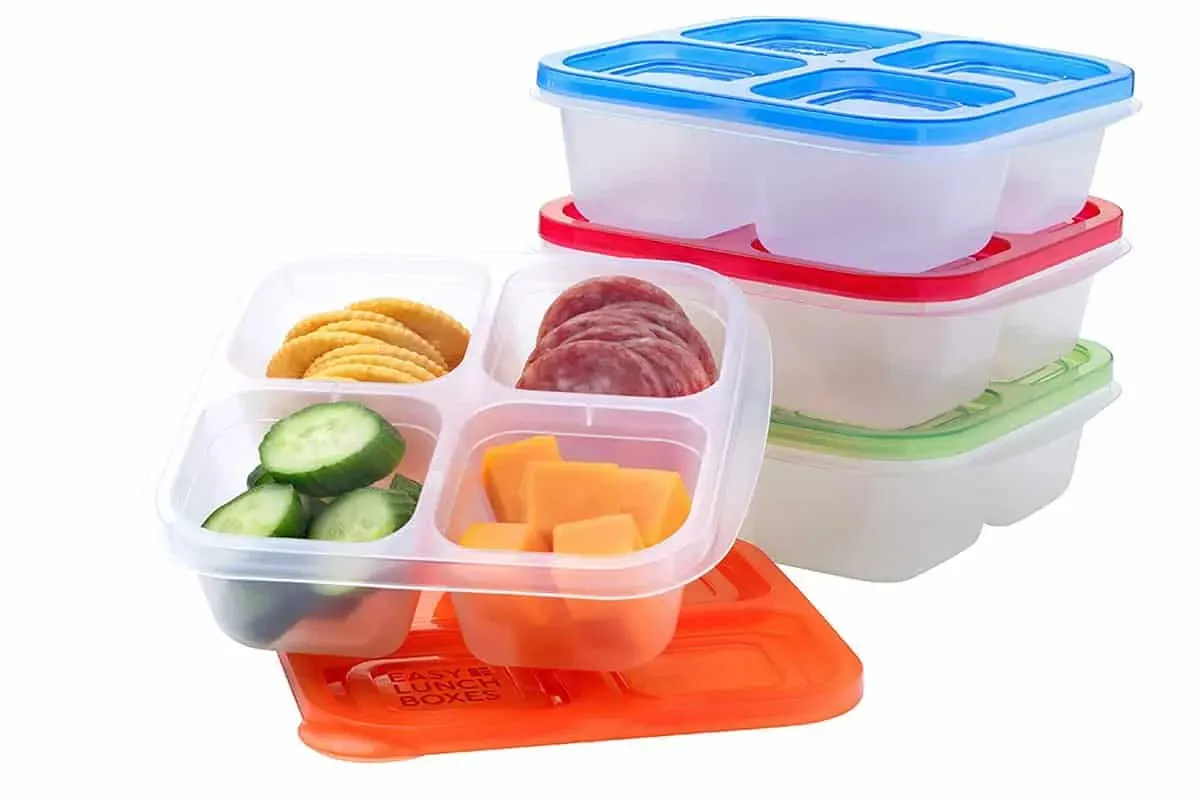
Plastique
Il est léger et couramment utilisé dans les boîtes à lunch grand public. Choisissez du PP de qualité alimentaire, sans BPA, avec une certification claire.
Le prix abordable est un autre avantage lorsque vous achetez en gros.
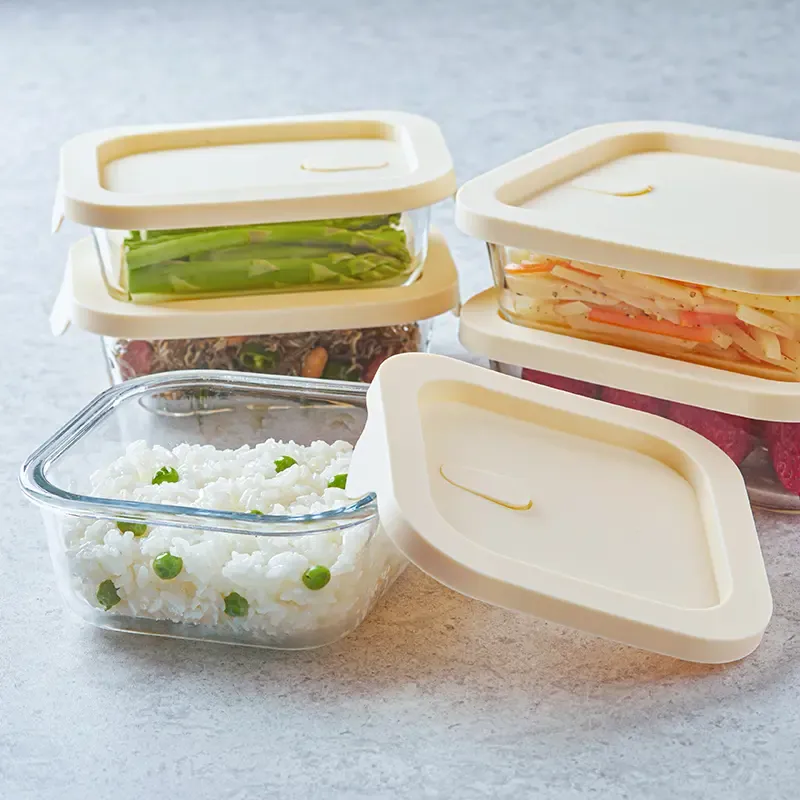
Verre
Il est connu pour ses caractéristiques chimiquement inertes et adaptées au micro-ondes.
Comparé au modèle en plastique et à celui en acier inoxydable, celui-ci sera plus lourd et plus fragile lorsqu'il sera frappé.
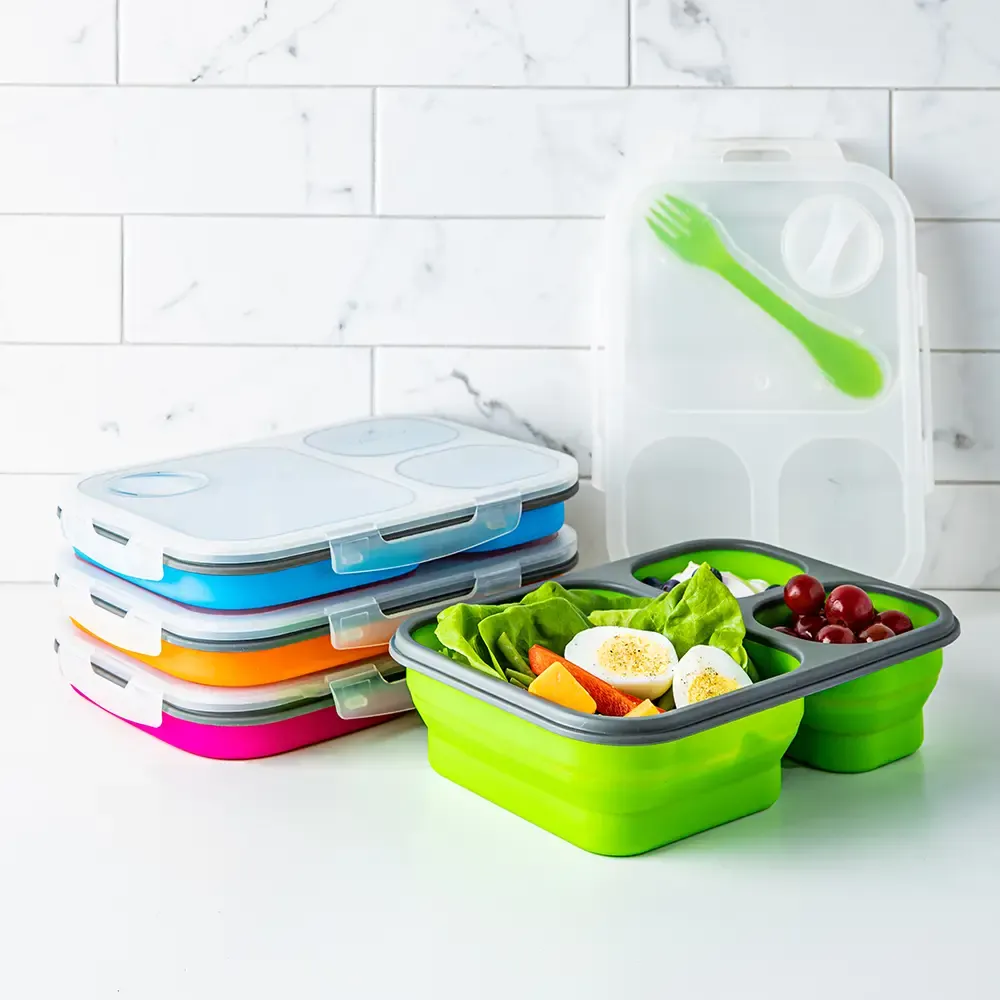
Silicone
Les bords de la boîte à lunch en silicone sont souples et pliables.
Les modèles pliables ou empilables permettent de gagner de la place dans les sacs à dos ou les sacs-repas.
Acier inoxydable
Il se caractérise par sa durabilité, sa non-réactivité et sa résistance à la chaleur.
Ces caractéristiques en font un matériau privilégié pour les plateaux intérieurs et les boîtes à lunch électriques.

Cinq priorités clés pour les acheteurs
Lorsque vous sélectionnez un Matériau de la boîte à lunch, la plupart des acheteurs considèrent :
- Sécurité alimentaire et stabilité chimique – risque de lixiviation ou de réaction avec les aliments.
- Résistance à la chaleur et capacité de réchauffage – aptitude au micro-ondes ou au chauffage intégré.
- Durabilité et longévité – résistance aux fissures, aux bosses ou à l'usure à long terme.
- Poids et portabilité – facilité de transport au quotidien et adaptabilité aux enfants ou aux navetteurs.
- Facilité de nettoyage et d'entretien – Compatibilité avec le lave-vaisselle, résistance aux taches et aux odeurs.
Tableau comparatif des matériaux
Le tableau ci-dessous compare quatre Matériau de la boîte à lunch types dans les cinq domaines prioritaires. Les notes sont générales (Excellent / Bon / Passable / Médiocre) et accompagnées de commentaires concis.
| Facteur → Matériau ↓ | Plastique (PP) | Acier inoxydable (304/316) | Verre | Silicone |
|---|---|---|---|---|
| Sécurité alimentaire et stabilité chimique | Bon — Le PP de qualité alimentaire est stable ; vérifiez les certifications. | Excellent — inerte, de qualité alimentaire | Excellent — inerte, sans lixiviation | Bon — silicone alimentaire OK |
| Résistance à la chaleur et réchauffage | Bon — de nombreux récipients en PP peuvent être utilisés au micro-ondes ; vérifiez l'étiquette | Excellent — compatible avec le chauffage direct | Bon — passe au micro-ondes/four ; lourd | Bon — résistant à la chaleur ; ne convient pas à une flamme directe |
| Durabilité et longévité | Correct — peut se rayer ou se déformer avec le temps | Excellent — très résistant | Correct — fragile mais résistant aux rayures | Bon — souple, durable si de haute qualité |
| Poids et portabilité | Excellent — très léger, idéal pour les enfants | Bon — plus lourd mais robuste | Mauvais — lourd et fragile | Excellent — léger et pliable |
| Facilité de nettoyage et d'entretien | Bon — il existe des modèles lavables au lave-vaisselle ; peut retenir les odeurs | Excellent — facile à nettoyer, résiste aux taches et aux odeurs | Excellent — non poreux et facile à nettoyer | Bon — facile à laver ; peut retenir les huiles dans sa texture |
Les points forts de chaque matériau (et pourquoi)
- Acier inoxydable — excellente durabilité et sécurité alimentaire.
Recommandation : Les cols blancs et les utilisateurs soucieux de leur santé sont vivement encouragés à utiliser une boîte à lunch en acier inoxydable lorsque cela est nécessaire. L'acier inoxydable combine résistance à la chaleur, robustesse et inertie ; il convient à ceux qui se soucient de la capacité de réchauffage et de la longévité.
- Verre — excellent en termes d'inertie alimentaire et de facilité de nettoyage.
Recommandation : Les familles qui préparent leurs repas à l'avance et les utilisateurs de micro-ondes sont les publics cibles auxquels s'adresse cette boîte à lunch fabriquée dans ce matériau. Le verre ne libère pas de substances chimiques, est facile à inspecter et à nettoyer, et présente les aliments de manière attrayante. La seule chose à laquelle il faut faire attention, c'est sa fragilité.
- Plastique (PP) — excellent en termes de portabilité et de légèreté.
Recommandation : Nous dirions que ce produit convient particulièrement aux enfants, aux étudiants et aux navetteurs qui privilégient la légèreté et la résistance aux chocs. Mais n'oubliez pas d'utiliser du PP de qualité alimentaire, sans BPA, certifié et vérifié, et de vérifier les étiquettes indiquant si le produit peut être utilisé au micro-ondes ou au lave-vaisselle.
- Silicone — excellente flexibilité et compressibilité.
Recommandation : Idéal pour les voyageurs et tous ceux qui ont besoin de contenants pliables ou peu encombrants. Également recommandé comme joints et garnitures pour une meilleure étanchéité.
Résumé
- Employés de bureau : Acier inoxydable (intérieur) ou verre (si accès à un micro-ondes au bureau). Privilégiez la durabilité et l'hygiène.
- Étudiants et enfants : PP de qualité alimentaire pour les jeunes enfants ; acier inoxydable pour les enfants plus âgés. Privilégiez la légèreté et la résistance aux chocs.
- Navetteurs et voyageurs : Options à double paroi en acier inoxydable ou en silicone pliable pour une meilleure conservation thermique et un gain de place. Choisissez des modèles étanches.
- Utilisateurs soucieux de leur santé : Acier inoxydable ou verre pour des surfaces inertes et une désinfection facile.
- Familles et préparateurs de repas : Verre pour le stockage et le réchauffage ; acier inoxydable pour le transport à chaud et la durabilité.
Remarque spéciale concernant les boîtes à lunch électriques
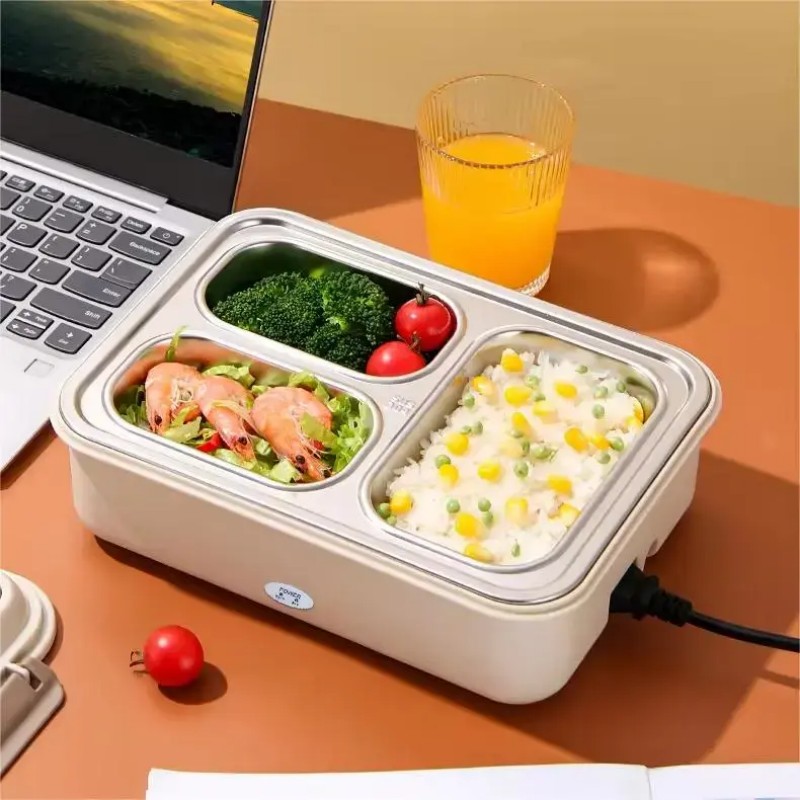
Si vous utilisez une boîte à lunch électrique, le choix des matériaux est essentiel : acier inoxydable Les plateaux intérieurs constituent la solution privilégiée par l'industrie pour le transfert de chaleur, l'hygiène et la sécurité. Les boîtiers extérieurs peuvent être en plastique ou en métal, mais les surfaces intérieures en contact avec les aliments doivent être en acier inoxydable 304/316. Vérifiez les certificats de conformité alimentaire et les marquages de sécurité électrique avant l'achat.
Liste de contrôle pratique pour l'achat
Outre les matériaux composant la boîte à lunch, vous devez tenir compte des éléments suivants :
- Confirmer les certifications : FDA, LFGB (UE) ou normes locales applicables en matière de contact alimentaire.
- Vérifier la qualité des matériaux et les rapports d'essai des produits (CoA).
- Vérifiez les étiquettes du micro-ondes et du lave-vaisselle, le cas échéant.
- Demandez des échantillons pour tester les propriétés tactiles : poids, étanchéité et nettoyage.
- Inspectez les joints du couvercle et les mécanismes de verrouillage pour vérifier leur étanchéité.
- Coût du cycle de vie des facteurs : une meilleure qualité des matériaux à l'achat réduit souvent la fréquence de remplacement et les retours.
Conclusion
Il n'existe pas de “ meilleur ” universel.” Matériau de la boîte à lunch— Le choix optimal dépend des priorités. Pour la chaleur, la durabilité et l'hygiène à long terme, l'acier inoxydable est le meilleur choix. Pour l'inertie et la facilité d'inspection/nettoyage, le verre est idéal. Pour la légèreté, la portabilité et une utilisation adaptée aux enfants, le PP de qualité alimentaire est l'option pratique. Pour les voyages et le rangement compact, le silicone est excellent. Utilisez les conclusions ci-dessus sur les performances des matériaux pour choisir une boîte à lunch adaptée à votre routine : cette adéquation vous permettra d'obtenir le meilleur équilibre entre commodité, sécurité et valeur.
À propos de Purecook
Purecook est considéré comme un principal fabricant d'ustensiles de cuisine en acier inoxydable par le bouche-à-oreille de nos clients internationaux. Pour les clients professionnels, nous pouvons fournir boîte à lunch en acier inoxydable en gros fourniture et solutions personnalisées pour boîtes à lunch.
Pour ce qui est des matériaux les plus adaptés pour les boîtes à lunch, nous recommandons l'acier inoxydable. Voici notre point de vue à ce sujet. monde moderne en constante évolution:
⏱️Chauffage rapide, aucun transfert d'aliments nécessaire
🧽Facile à nettoyer et séchage rapide
🔒Joint étanche
🛡️Durabilité de qualité industrielle
🪶Léger et résistant aux chocs