


La Chine est l'un des plus grands centres de production d'articles de cuisine au monde, et les ustensiles de cuisine en acier inoxydable font partie de ses produits d'exportation les plus compétitifs. Pour les marques internationales, les grossistes et les détaillants, s'approvisionner en articles culinaires en Chine présente des avantages évidents, tels que des prix compétitifs, une forte capacité de production et des options de personnalisation flexibles. Toutefois, il est difficile de trouver un fournisseur fiable pour les ustensiles de cuisine en Chine. fabricant d'ustensiles de cuisine en acier inoxydable doit faire l'objet d'une évaluation minutieuse.
Purecook, un principal fabricant d'ustensiles de cuisine en acier inoxydable, Il propose un flux de travail pratique, étape par étape, que les équipes chargées des achats peuvent mettre en œuvre pour réduire les risques et mettre en place une chaîne d'approvisionnement stable avec un personnel qualifié. Fournisseur d'ustensiles de cuisine en acier inoxydable ou usine d'ustensiles de cuisine en acier inoxydable.
Commencez par définir les caractéristiques de votre batterie de cuisine en acier inoxydable
Ne vous contentez pas d'une liste de fabricants d'ustensiles de cuisine. Tout échec en matière de recherche de fournisseurs commence par une brève description. Avant de rechercher des fournisseurs, créez une liste complète de Dossier de demande de devis qui comprend
- Canal cible et fourchette de prix (commerce de détail, commerce électronique, distribution, hôtellerie).
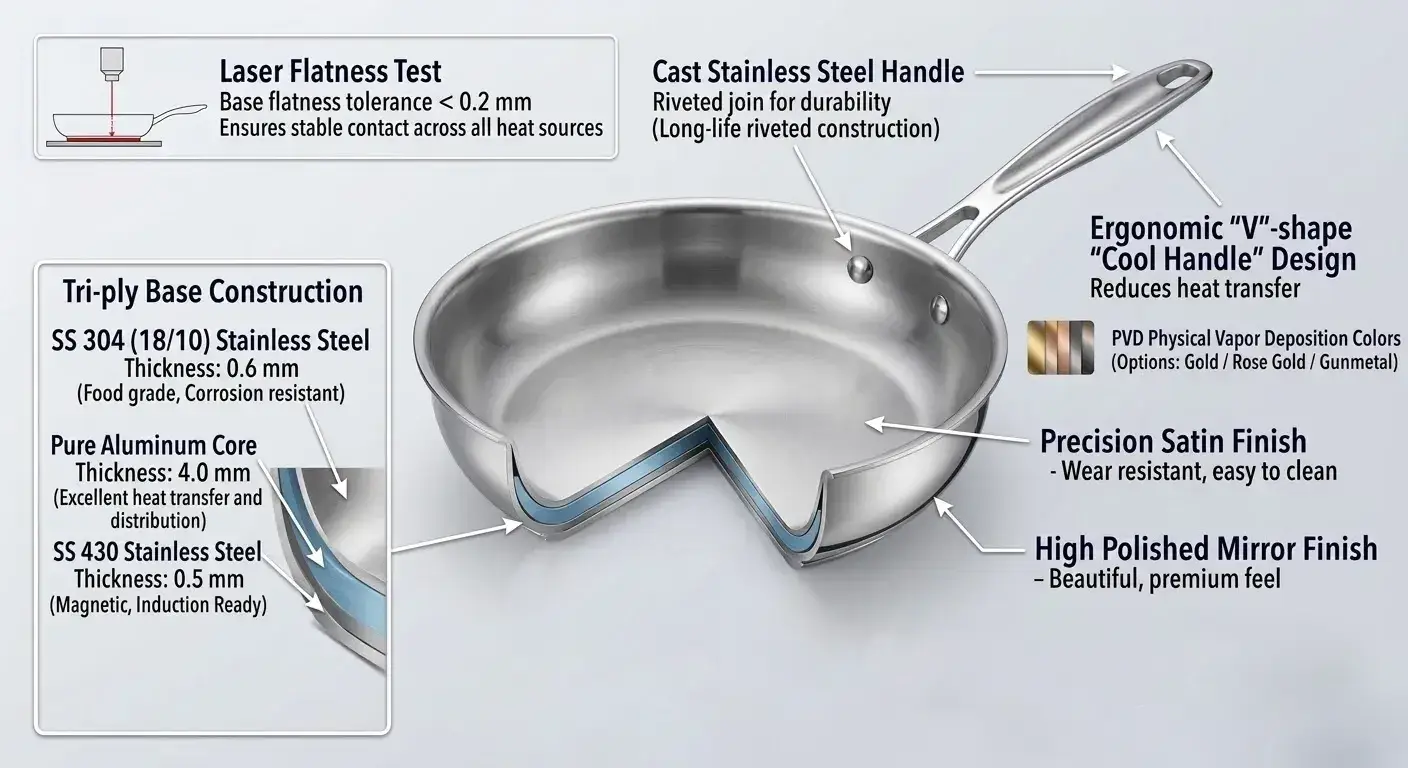
- Matériaux et constructiongrade d'acier (304/316), épaisseur du corps, base (simple couche / triple couche / liée à l'impact), épaisseur du disque.
- Exigences fonctionnellesLes caractéristiques de l'appareil sont les suivantes : prêt pour l'induction, adapté au four, adapté au lave-vaisselle, antiadhésif ou non revêtu.
- Finition et aspect: options de couleurs miroir, satin, PVD.
- Poignées et couverclesLes caractéristiques de l'appareil : poignées rivetées ou soudées, caractéristiques du couvercle en verre, évents pour la vapeur.
- EmballageBoîte cadeau, plateau intérieur, manuel des langues, exigences UPC/GS1.
- Tests d'acceptationLes critères de qualité sont les suivants : tolérance de planéité, répartition de la chaleur, traction des rivets, brouillard salin (si marché côtier), et critères NQA.
Règle clé : Verrouillez le spécimen avant d'entrer en contact avec n'importe quel fabricant d'ustensiles de cuisine. Sans spécifications, vous comparerez des pommes et des oranges et paierez pour des inconnues.
Identifier les véritables usines d'ustensiles de cuisine en acier inoxydable par rapport aux sociétés commerciales
De nombreux listings s'affichent comme des usines mais sont en fait des intermédiaires commerciaux. Votre objectif est de trouver un usine d'ustensiles de cuisine qui possède les processus de base.
Liste de contrôle pour la vérification :
- Champ d'application de la licence d'exploitation : Comprend-elle la fabrication ?
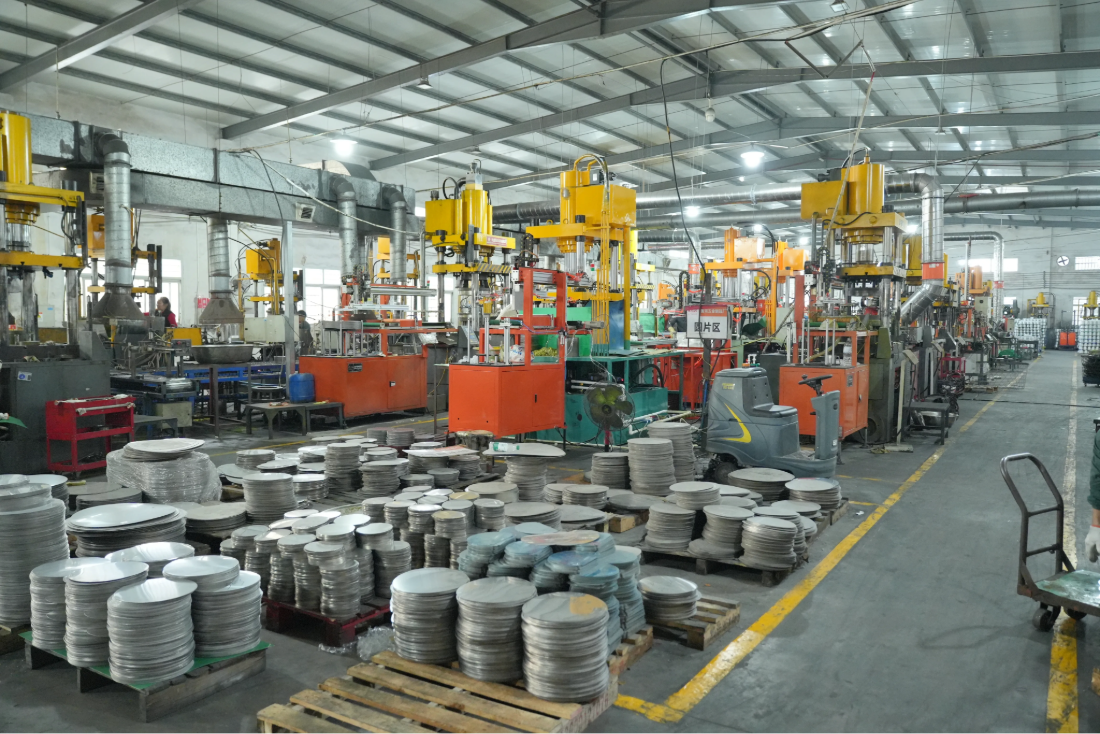
- Photos et vidéos de la production réelle (presses, emboutissage, lignes de polissage).
- Preuve de la propriété de l'outillage (matrices, moules) - demander à qui appartient l'outil après la production.
- Preuve de la finition en interne : polissage, passivation, assemblage.
- Indicateurs de capacité : stockage des bobines, tonnage des presses et chiffres de production mensuels.
Si un fournisseur ne peut pas prouver qu'il possède ses propres presses et sa propre finition, traitez-le comme un fournisseur de services. marchand d'ustensiles de cuisine. Les négociants sont utiles pour des raisons de commodité, mais ils ne remplacent pas une usine lorsque vous avez besoin de cohérence et de personnalisation.
Liste restreinte avec examen des capacités
À partir d'une liste initiale, restreindre les candidats sur la base de critères objectifs :
- Expérience de l'exportation et des marchés cibles desservis (connaissance de la conformité UE/États-Unis).
- Focus sur le produit : Les usines spécialisées dans les ustensiles de cuisine sont meilleures que les ateliers de métallurgie générale.
- Systèmes de qualité : ISO 9001, procédures opératoires normalisées documentées, normes NQA publiées.
- Soutien technique : Produisent-ils des dessins, des nomenclatures et des rapports FAI ?
- Communication : anglais technique, réactivité et formats de devis formels.
Établir un tableau de bord pour classer les fournisseurs et sélectionner 3 à 5 usines pour l'évaluation de l'échantillon.
Évaluation d'échantillons d'ustensiles de cuisine en acier inoxydable
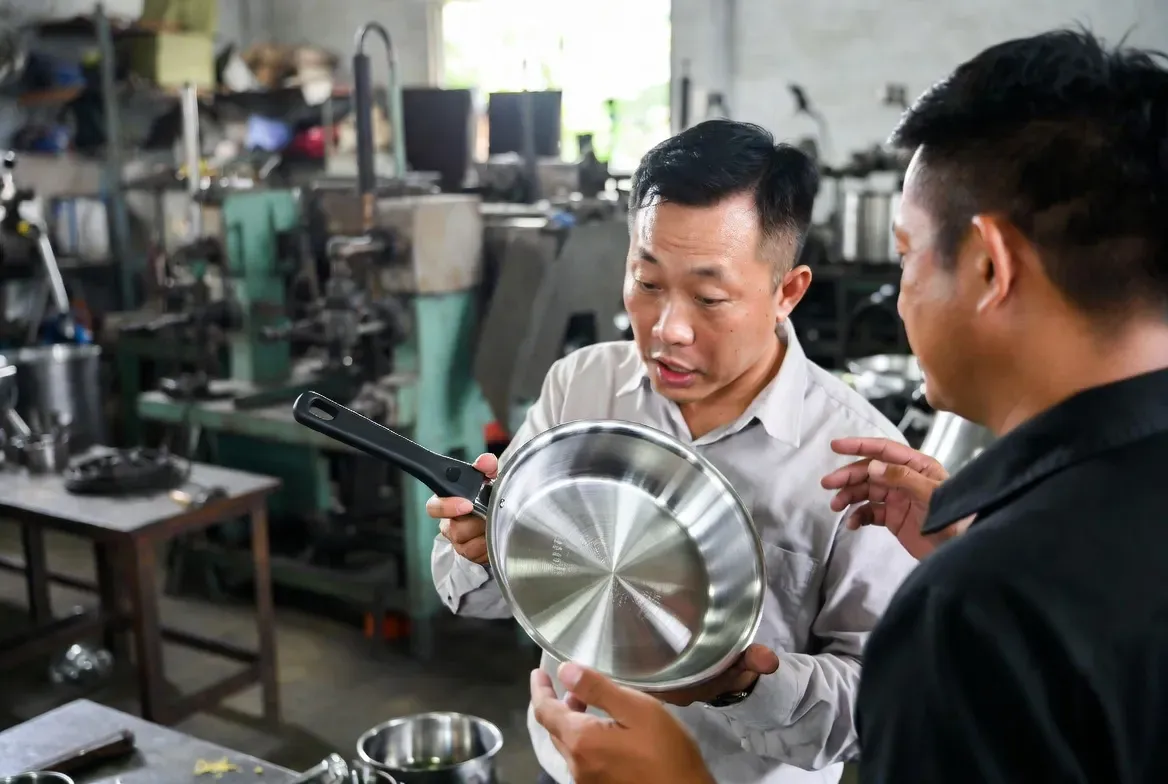
Les échantillons sont régulièrement polis pour impressionner les acheteurs. Votre évaluation doit être technique et reproductible. Le test de la structure l'emporte sur la simple inspection de l'apparence.
Tests à effectuer sur les échantillons :
- Poids et dimensionsVérifier la conformité avec les spécifications (tolérance ±0,5%).
- Planéité de la base: mesure de l'écart en mm sur une surface de précision.
- Distribution de la chaleurla cartographie calorimétrique ou IR pour montrer l'homogénéité du chauffage.
- Test de déformationLe cycle thermique est suivi d'un contrôle de la planéité.
- Résistance des rivets et des poignéesLes essais de couple et de cisaillement.
- Essai de couplage par inductionLes résultats de l'étude sont les suivants : mesure du temps de couplage et de l'absorption d'énergie.
- Durabilité de la finitionLes tests d'abrasion et d'empreintes digitales pour l'esthétique de la vente au détail.
Archiver l'échantillon approuvé en tant que échantillon d'or et saisir une nomenclature détaillée liée à cette unité physique. L'échantillon en or est votre référence légale pour les futurs lots.
Vérifier l'authenticité de l'acier
Les erreurs d'étiquetage entre l'acier 201 et l'acier 304 sont fréquentes. Exigez des données concrètes :
- Certificat d'analyse de l'usine pour chaque bobine.
- Étiquetage des bobines entrantes et traçabilité de la production dans l'usine.
- Vérification sur place par XRF ou spectromètre de la composition en Cr/Ni/Mn.
- Des tests de laboratoire aléatoires effectués par des tiers pour les commandes à haut risque.
Documentez la fourchette de composition autorisée dans votre contrat et faites de la vérification des matériaux un point de passage obligé pour la production.

Mise en œuvre du contrôle de la qualité en cours de fabrication
La qualité doit être assurée tout au long de la production. Vous ne pouvez pas compter uniquement sur le contrôle final.
Points de contrôle recommandés :
- Contrôle des matériaux entrants (CoA, XRF).
- Étape de formage/pressage (contrôles ponctuels de l'épaisseur et de la planéité).
- Phase de collage/impact (essais de pelage sur disques plaqués).
- Contrôles de la ligne de polissage (tests visuels et de rugosité).
- Vérifications de l'assemblage (couple de serrage de la poignée, ajustement du couvercle).
- Tests fonctionnels complets avant expédition.
Faire appel à des inspecteurs tiers pour les audits à mi-parcours et avant expédition et exiger des preuves photographiques pour les contrôles critiques.
Protections contractuelles - Verrouiller la reproduction
Votre contrat doit convertir l'échantillon d'or en obligations exécutoires :
- Annexe détaillée des spécifications et nomenclature avec tolérances.
- Clause d'archivage de l'échantillon d'or et critères d'acceptation de l'inspection du premier article.
- Propriété de l'outillage et conditions d'amortissement (qui conserve les matrices).
- Formule d'indexation des prix liée aux indices des matières premières.
- Clause d'approvisionnement en pièces détachées avec délais de livraison.
- Sanctions en cas de retard de livraison et recours en cas de terrains non conformes.
Les contrats sont le mécanisme qui oblige un usine de fabrication d'ustensiles de cuisine en acier inoxydable de rendre des comptes - utilisez-les.
Inspection avant expédition et contrôles de l'emballage
Les contrôles finaux permettent d'éviter les surprises en matière de transit.
Liste de contrôle avant expédition :
- L'échantillonnage NQA (limite de qualité acceptable) pour l'apparence et les défauts critiques.
- Lot d'essais fonctionnels (stabilité de la température, ajustement du couvercle).
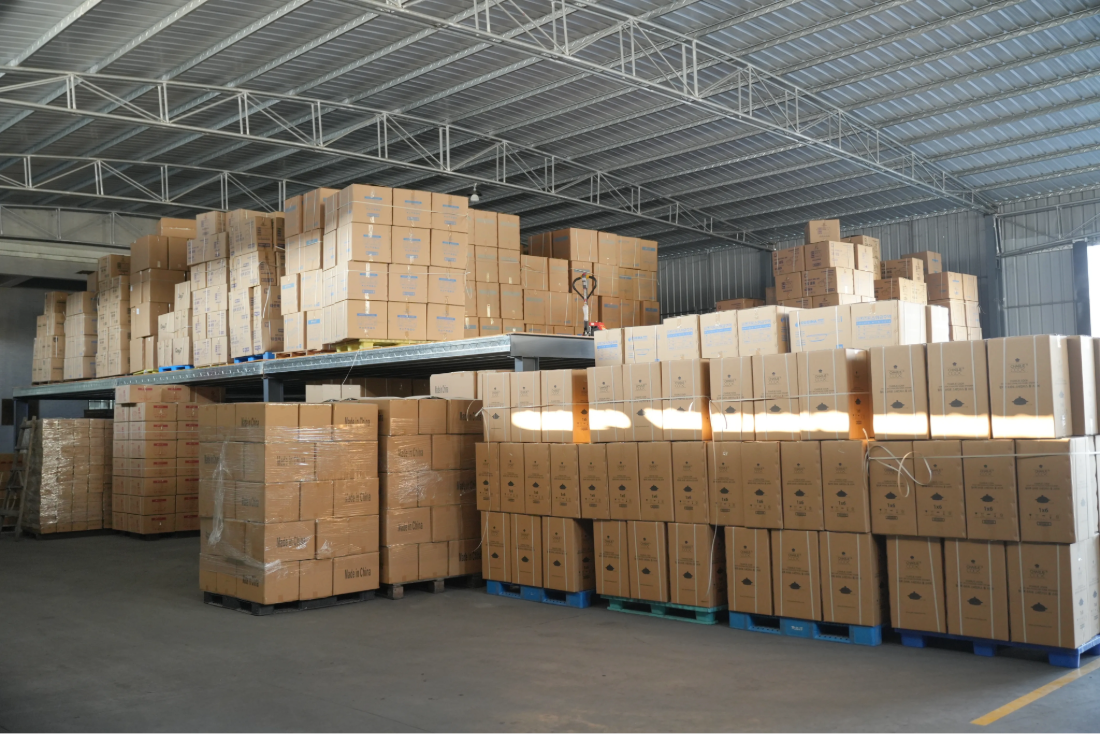
- Ouvertures aléatoires du carton pour vérification de l'emballage.
- Des mesures antirouille, des barrières contre l'humidité et un plan de palettisation.
- Documentation photographique des palettes emballées.
Conditionner le dédouanement à la réussite de l'inspection avant expédition. Retravailler ou rejeter les chargements non conformes.
Logistique, stocks tampons et stratégie de réapprovisionnement
Concevoir le réapprovisionnement pour absorber la volatilité des stocks :
- Conserver un stock de sécurité égal à un délai de réapprovisionnement plus un tampon.
- Utiliser les expéditions FCL pour les principales UGS afin de réduire le fret par unité et les dommages dus à la manutention.
- Planifier les créneaux de production saisonnière et réserver l'outillage/le temps pour les périodes de pointe.
- Négocier des paliers de volume qui permettent d'obtenir de meilleurs prix et une capacité prioritaire.
Communiquer les prévisions, mais éviter les promesses rigides si la demande du marché fluctue ; prévoir des prévisions glissantes à 90 jours.
Développer la redondance des fournisseurs et les tableaux de bord
La dépendance à l'égard d'une source unique est fragile. Mettre en œuvre :
- Primaire et secondaire usine de fabrication d'ustensiles de cuisine en acier inoxydable les affectations pour les UGS critiques.
- Un tableau de bord des fournisseurs permettant de suivre : le taux de défauts, l'OTIF, le score de communication et la variance des coûts.
- Examens trimestriels des activités et plans d'amélioration conjoints.
Utiliser les tableaux de bord pour déclencher des mesures correctives, des augmentations de capacité ou le remplacement de fournisseurs.
Passer de la transaction au partenariat
Traiter la personne choisie fabricant d'ustensiles de cuisine en tant que partenaire technique :
- Partager la feuille de route du produit et les plans de distribution.
- Cofinancer l'outillage lorsque les volumes le justifient.
- Programmer des sprints de développement de produits communs pour les nouvelles UGS.
- Insister sur la transparence des inducteurs de coûts lorsque les prix de l'acier augmentent.
Les partenariats réduisent les frictions et vous aident à évoluer tout en protégeant vos marges.
Références rapides pour les appels d'offres et les audits d'usine
L'appel d'offres doit comprendre Fiche technique de l'UGS, exigences en matière d'échantillons d'or, taille de la série pilote, modèle FAI et spécifications d'emballage.
L'audit de l'usine doit être vérifié : presses et outillage, ligne de polissage, capacité de collage, traçabilité des matériaux, capacité de pièces de rechange, documentation pour l'exportation.
Conclusion
L'approvisionnement en ustensiles de cuisine en acier inoxydable fiables en Chine n'est pas un problème de prospection, c'est un problème de système. La différence entre une commande transactionnelle et un approvisionnement prévisible réside dans la rigueur des spécifications, la vérification en usine, la validation pilote, le contrôle en cours de processus et l'application des contrats. Utilisez ce flux de travail pour passer de “espérer que c'est bon” à “prouver que c'est bon” - et vous convertirez un produit en un produit de qualité. Fournisseur d'ustensiles de cuisine en acier inoxydable en un partenariat de fabrication évolutif avec l'entreprise de votre choix. usine de fabrication d'ustensiles de cuisine en acier inoxydable.
À propos de Purecook
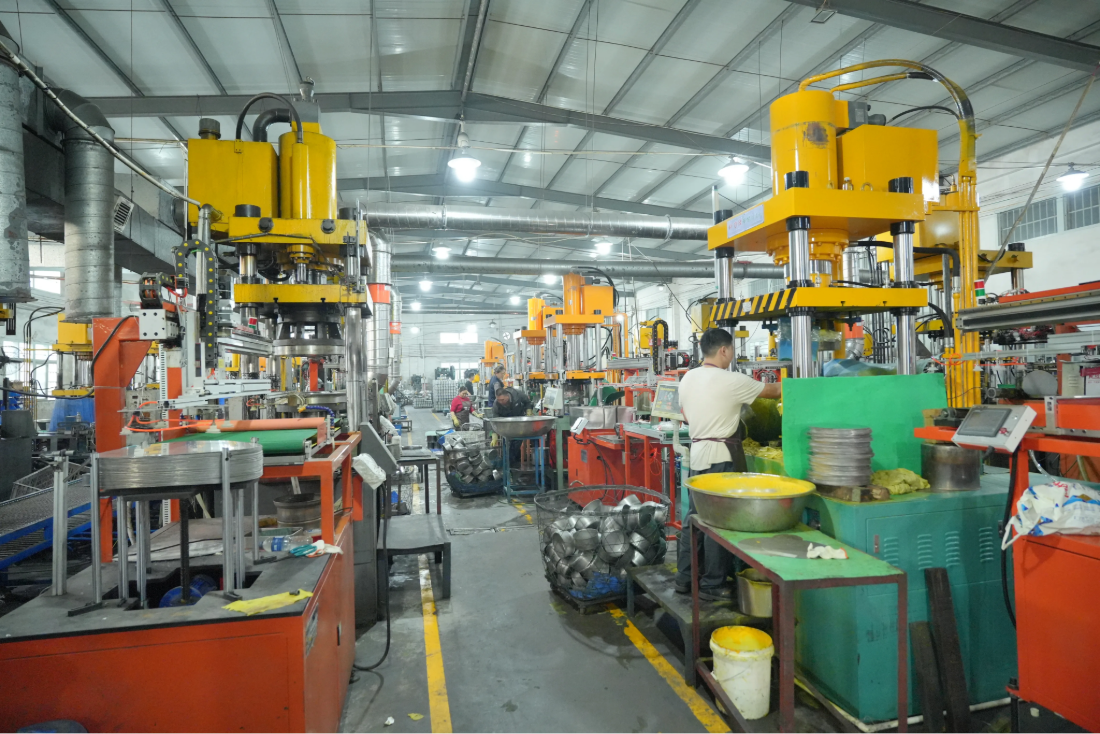
Cultiver dans la ustensiles de cuisine en acier inoxydable depuis des décennies, Purecook est l'une des entreprises les plus dignes de confiance. fabricants d'ustensiles de cuisine en acier inoxydable avec 15 lignes de produits dans notre usine de 13320 mètres carrés. Non seulement nous fournissons des modèles universels d'ustensiles de cuisine en acier inoxydable en gros, mais nous soutenons également les produits suivants Projets OEM/ODM d'ustensiles de cuisine en acier inoxydable pour des clients internationaux.
Contactez nos équipes d'experts en attente pour vous aider à réaliser vos projets dès maintenant !