


A França proibiu a utilização de PFAS em cosméticos e têxteis a partir de 1 de janeiro de 2026. A Dinamarca deverá seguir-se-lhe em julho com restrições que visam o vestuário e o calçado de consumo. A nível da UE, uma restrição universal dos PFAS - abrangendo mais de 10.000 compostos químicos, incluindo os utilizados em revestimentos de panelas antiaderentes - está atualmente em vias de ser decidida pela Comissão Europeia em 2027.
Para as empresas que se abastecem de utensílios de cozinha no mercado europeu, o panorama regulamentar está a mudar mais rapidamente do que muitos compradores esperam - não num futuro distante, mas agora mesmo.
Neste artigo, a Purecook, uma fabricante líder de utensílios de cozinha em aço inoxidável, O relatório da Comissão Europeia sobre a proibição dos PFAS na UE, que produtos de cozinha correm mais riscos e porque é que o aço inoxidável está a tornar-se discretamente a aposta segura para os compradores grossistas que planeiam as suas linhas de produtos para 2027 e mais além.
O que são PFAS e porque é que os compradores de utensílios de cozinha se devem preocupar?
As PFAS - substâncias per- e polifluoroalquílicas - são uma família de mais de 10.000 produtos químicos sintéticos. A indústria chama-lhes “químicos eternos” porque não se decompõem no ambiente. Não em décadas. Nem em séculos.
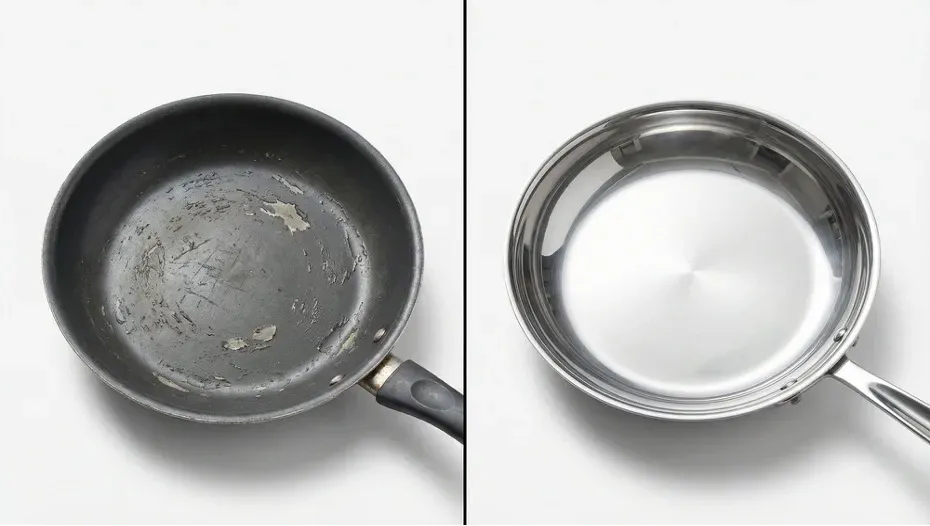
Estão em todo o lado: espumas de combate a incêndios, embalagens de alimentos, têxteis à prova de água. E sim, nos utensílios de cozinha. Especificamente, os revestimentos antiaderentes à base de PTFE - a tecnologia por detrás do Teflon e dos seus muitos sucessores - são classificados como PFAS.
Eis o que importa para o aprovisionamento de utensílios de cozinha: O PTFE (politetrafluoroetileno) é, ele próprio, um composto PFAS. Assim, quando os reguladores proíbem os PFAS como uma classe, não estão apenas a visar o antigo PFOA, já eliminado. Estão a visar os revestimentos ainda utilizados na maioria das panelas antiaderentes vendidas em todo o mundo.
Um inquérito da Consumer Reports de 2025 revelou que 65% dos adultos americanos estão, pelo menos, um pouco preocupados com os PFAS nos seus utensílios de cozinha. Essa ansiedade dos consumidores está agora a traduzir-se em acções regulamentares - e está a avançar mais rapidamente na Europa do que em qualquer outro lugar.
A linha do tempo da regulamentação: Ponto da situação atual
A situação é complexa no que respeita ao aprovisionamento de utensílios de cozinha neste momento, pelo que aqui se apresenta uma análise clara das principais etapas:
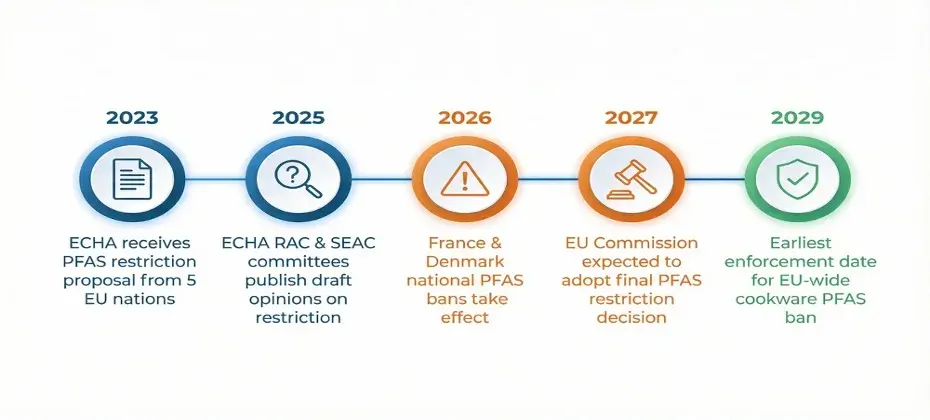
Já em vigor: A Lei francesa 2025-188, aprovada a 27 de fevereiro de 2025, proibiu os PFAS em cosméticos, têxteis de consumo, calçado, cera de esqui e agentes impermeabilizantes a partir de 1 de janeiro de 2026. Os utensílios de cozinha foram originalmente incluídos no projeto, mas foram retirados após um intenso lobby da indústria - principalmente do Groupe SEB, que fabrica a Tefal. Os grupos ambientalistas consideraram esta isenção uma grande lacuna. A principal conclusão para os compradores: os utensílios de cozinha não foram considerados “seguros” - foram temporariamente excluídos.
A chegar em 2026: Dinamarca proibirá a venda e importação de vestuário, calçado e produtos de impermeabilização para uso doméstico que contenham PFAS começando em julho de 2026. O Regulamento da UE relativo a embalagens e resíduos de embalagens (PPWR), que entrou em vigor em fevereiro de 2025, já estabelece limites para os PFAS nas embalagens que entram em contacto com os alimentos.
Entretanto, os comités científicos da ECHA (RAC e SEAC) estão a finalizar a sua avaliação da proposta de restrição universal dos PFAS. O parecer final do RAC e o projeto de parecer do SEAC estão previstos para o primeiro semestre de 2026, seguindo-se uma consulta pública.
Previsto para 2027 e anos seguintes: A ECHA tem como objetivo apresentar os seus pareceres finais à Comissão Europeia até ao final de 2026. Prevê-se que a Comissão adopte uma decisão em 2027. Se for adoptada uma restrição, a maior parte dos sectores enfrentará um período de transição de 18 meses. Alguns sectores podem beneficiar de derrogações limitadas no tempo, até 13,5 anos - mas é pouco provável que os utensílios de cozinha antiaderentes de consumo sejam elegíveis.
Porquê? Porque a proposta de restrição actualizada, publicada pela ECHA em agosto de 2025, afirma explicitamente que estão disponíveis substitutos para os utensílios de cozinha antiaderentes de consumo.
Na lógica regulamentar da UE:
Ausência de substitutos viáveis = derrogação potencial.
Substitutos viáveis disponíveis = não há isenção.
A direção é clara. A única questão é saber exatamente quando, e se continuar a fabricar utensílios de cozinha antiaderentes à base de PFAS ainda faz sentido do ponto de vista comercial para o mercado da UE.
Que produtos de cozinha estão em risco?
O objetivo da Purecook é fornecer uma avaliação prática dos riscos para os compradores de utensílios de cozinha que se dirigem ao mercado da UE:
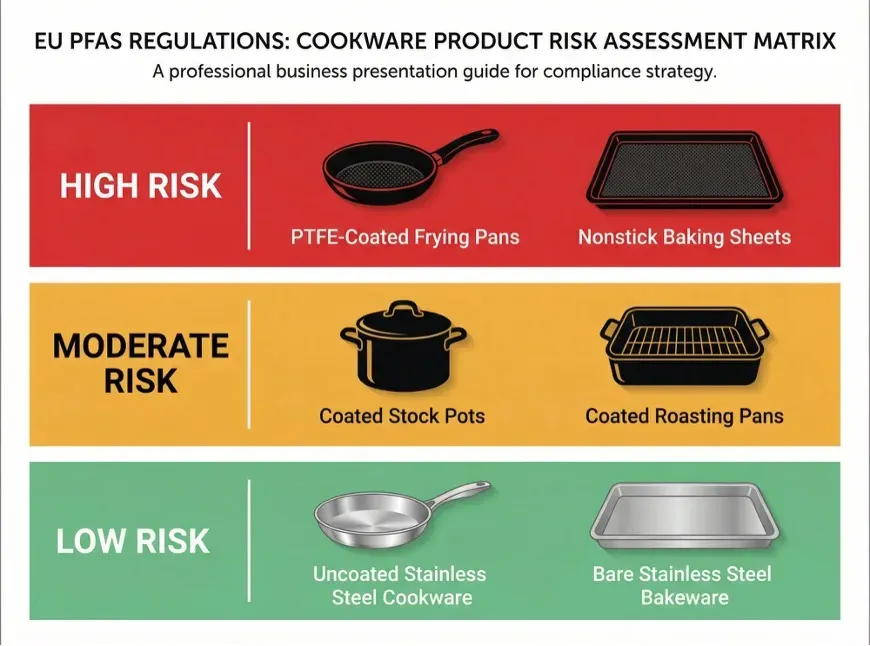
Risco elevado - diretamente afetado pelas restrições relativas aos PFAS: Frigideiras, panelas e conjuntos de utensílios de cozinha antiaderentes revestidos a PTFE. Este é o principal objetivo. O PTFE é um fluoropolímero e enquadra-se perfeitamente na definição de PFAS utilizada na proposta da UE. Os rótulos “sem PFOA” não ajudam - o problema é o revestimento em si.
Risco moderado - pode necessitar de reformulação: Utensílios de cozinha com determinados revestimentos PVD ou tratamentos de superfície especiais que utilizam compostos fluorados no processo. Nem todos os revestimentos PVD envolvem PFAS, mas os compradores devem verificar. Escrevemos em pormenor sobre como funcionam os tratamentos de superfície e porque são importantes - vale a pena rever essa peça tendo em mente a conformidade com os PFAS.
Baixo risco - inerentemente livre de PFAS: Trem de cozinha em aço inoxidável. Ferro fundido. Aço-carbono. Trem de cozinha esmaltado. Trem de cozinha com revestimento cerâmico (embora os revestimentos cerâmicos tenham os seus próprios problemas de durabilidade). Estes materiais não têm PFAS na sua composição e não requerem reformulação.
Nota lateral: Esta é uma daquelas mudanças regulamentares que parece abstrata até atingir a sua cadeia de abastecimento. Se 40% da sua linha de utensílios de cozinha for antiaderente revestido a PTFE, terá de proceder a uma revisão da linha de produtos dentro de 2-3 anos. É melhor começar a planear agora do que ter de se apressar quando a data da restrição for anunciada.
Porque é que o aço inoxidável é a aposta mais segura a longo prazo
Os utensílios de cozinha em aço inoxidável não contêm PFAS. Ponto final. Não há revestimentos para reformular. Não há químicos para eliminar gradualmente. Nenhum risco de conformidade relacionado com PFAS ao abrigo de qualquer regulamento atual ou proposto a nível mundial - uma vantagem fundamental para as estratégias de aprovisionamento a longo prazo de utensílios de cozinha orientadas para os mercados da UE e da América do Norte.
Esta é a resposta curta. A resposta mais longa envolve o posicionamento no mercado e a estratégia da marca num ambiente de aprovisionamento de utensílios de cozinha cada vez mais sensível ao risco.
O segmento dos “utensílios de cozinha não tóxicos” está a crescer. Marcas como Caraway, GreenPan e Made In construíram linhas inteiras de produtos em torno da promessa de não utilização de PFAS. Mas os revestimentos antiaderentes de cerâmica - apesar de não conterem PFAS - têm problemas de durabilidade bem documentados. Perdem as suas propriedades antiaderentes num período de um a dois anos de utilização regular. Isso é ótimo para uma frigideira de consumo $35. É um problema se estiver a construir uma marca de qualidade superior.
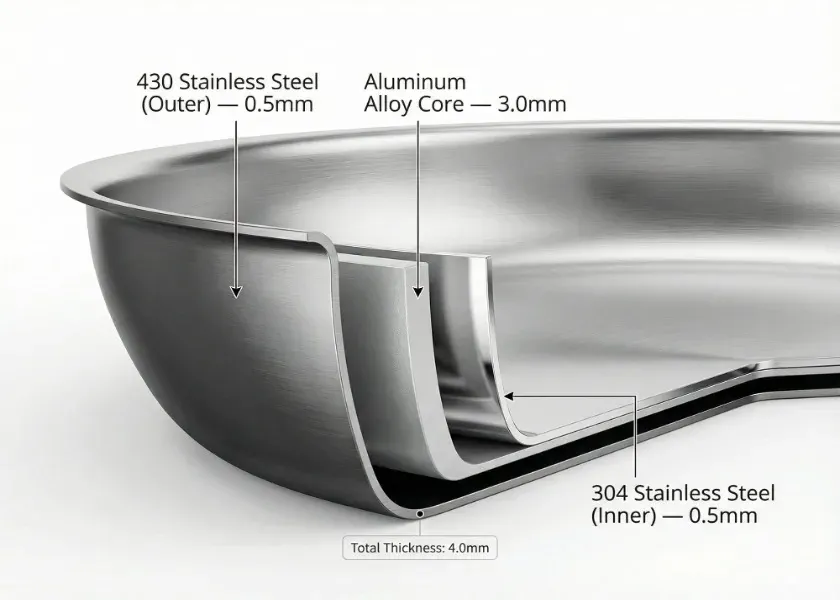
O aço inoxidável, pelo contrário, oferece uma vida útil de décadas. Uma frigideira de aço inoxidável de três camadas bem fabricada - exterior em aço inoxidável 430 para compatibilidade com indução, núcleo de alumínio para distribuição de calor, interior em aço inoxidável 304 para segurança alimentar - dá aos seus clientes um produto que funciona durante décadas sem depender de qualquer revestimento de superfície que se pode degradar com o tempo.
O aço inoxidável requer um pouco de técnica para evitar a colagem? Sim. Abordámos este assunto no nosso guia sobre se os utensílios de cozinha em aço inoxidável são antiaderentes. A resposta honesta: não é antiaderente como o PTFE, mas com um pré-aquecimento adequado e uma pequena quantidade de óleo, os alimentos soltam-se de forma limpa e consistente. A maioria dos chefes profissionais prefere-o precisamente por causa do dourado e do desenvolvimento do gosto que não se consegue com o antiaderente.
Para os compradores grossistas, o aço inoxidável preenche todos os requisitos que são importantes neste momento: risco zero de conformidade com os PFAS, posicionamento de qualidade superior, longa vida útil do produto e crescimento da procura impulsionado pela crescente sensibilização dos consumidores para a saúde.
Os EUA também estão a mudar - não o ignore
A Europa é o centro das atenções, mas os estados norte-americanos estão a agir de forma independente e, por vezes, mais agressiva - uma tendência que está a alterar cada vez mais as decisões globais de fornecimento de utensílios de cozinha.
O Minnesota proibiu os PFAS nos utensílios de cozinha (entre 11 categorias de produtos) a partir de 1 de janeiro de 2025 - um ano antes da entrada em vigor da lei francesa. O Maine aprovou uma proibição geral de todos os PFAS adicionados intencionalmente em todos os produtos, com um prazo de 2032. A Califórnia considerou uma proibição semelhante para os utensílios de cozinha em 2024; o governador vetou-a, mas a pressão legislativa não parou.
A nível federal, a regra de comunicação TSCA da EPA exige que os fabricantes comuniquem a utilização de PFAS a partir de abril de 2026.
Se vende utensílios de cozinha tanto na UE como nos EUA, está a enfrentar uma pressão regulamentar convergente de ambos os lados do Atlântico. Do ponto de vista do fornecimento de utensílios de cozinha, uma única linha de produtos sem PFAS que funcione em todo o lado é mais simples e mais barata do que manter SKUs separados para diferentes regimes regulamentares.
O que os compradores grossistas devem fazer agora mesmo
Não precisa de mudar todo o seu catálogo de um dia para o outro. Mas precisa de um plano. Eis o que recomendamos com base nas conversas com os nossos compradores e no que estamos a ver nos padrões de encomendas das actuais decisões de aquisição de utensílios de cozinha:
Auditar a sua atual gama de produtos. Identifique todas as SKU que utilizam PTFE ou qualquer revestimento fluorado. Calcule a percentagem da sua linha que é afetada. Se for significativa, precisa de um roteiro de transição para o futuro fornecimento de utensílios de cozinha.
Compreender os seus mercados-alvo. Se está a vender para França, a regulamentação está escrita na parede - apesar de os utensílios de cozinha terem obtido uma isenção temporária, os grupos ambientalistas estão a pressionar fortemente para que sejam incluídos na restrição a nível da UE. Se os seus compradores estão no Minnesota, pode já não estar em conformidade sem o saber.
Comece a experimentar alternativas em aço inoxidável. O a qualidade do material é importante. Para utensílios de cozinha em contacto com alimentos vendidos em mercados regulamentados, o aço inoxidável 304 (18/8) é a base de referência - cumpre a norma FDA 21 CFR, EU 1935/2004 e GB 9684-2011 da China. Não recomendamos o 201 para aplicações em contacto com os alimentos. Ponto final. O teor de crómio e níquel no 201 não cumpre os limites de migração exigidos pelas normas da UE e dos EUA. Se precisar de uma atualização sobre o que é que se faz nos utensílios de cozinha em aço inoxidável e porque é que isso é importante, é um bom ponto de partida.
Fale com a sua fábrica sobre os prazos de entrega. Mudar de antiaderente para aço inoxidável não é apenas uma troca de materiais - é um processo de produção diferente. Desenhar profundamente o aço inoxidável numa prensa hidráulica, polir até obter um acabamento espelhado ou acetinado, montar uma construção de três camadas - tudo isto requer equipamento e conhecimentos específicos. O nosso prazo de entrega normal para novas encomendas de utensílios de cozinha em aço inoxidável é de 30-45 dias, ou 45-60 dias para projectos OEM personalizados com novas ferramentas.
Posicione a sua marca à frente da curva. Não espere que a regulamentação chegue e depois comercialize “livre de PFAS” como uma reação confusa. Comece agora. Do ponto de vista do fornecimento de utensílios de cozinha a longo prazo, as marcas que lideram as mensagens de segurança - apoiadas por certificações de materiais reais, e não apenas por alegações de marketing - irão captar o segmento premium à medida que as proibições de PFAS se estendem a todos os mercados.
Como a Purecook ajuda no fornecimento e na transição dos seus utensílios de cozinha
Há mais de 20 anos que fabricamos utensílios de cozinha em aço inoxidável. Sem linhas de PTFE. Não há revestimentos antiaderentes para eliminar gradualmente. Toda a nossa capacidade de produção - desde a chapa em bruto 304 e 316 até aos utensílios de cozinha acabados, polidos e embalados - é inerentemente isenta de PFAS.
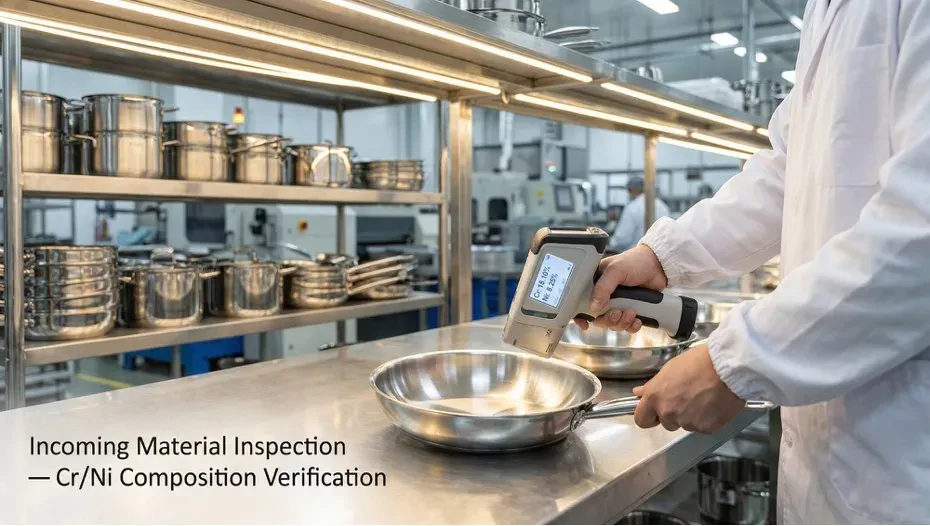
Cada lote de aço recebido passa pelo nosso espetrómetro para verificar o teor de crómio e níquel antes de entrar em produção. Possuímos as certificações de conformidade ISO 9001, BSCI, LFGB e FDA. Os nossos produtos são enviados para mais de 50 países, incluindo mercados com os regulamentos mais rigorosos do mundo em matéria de contacto com alimentos.
Se é proprietário de uma marca que pretende expandir a sua linha de aço inoxidável - ou se é uma marca centrada no antiaderente que pretende adicionar opções sem PFAS - podemos ajudar com a personalização OEM/ODM, desde a seleção do material ao acabamento da superfície, passando pela marca e embalagem personalizadas.
Navegar na nossa catálogo de panelas de aço inoxidável ou contacte-nos diretamente para discutir as suas necessidades de fornecimento. Enviaremos amostras no prazo de 7 a 10 dias após a confirmação das especificações.
A proibição dos PFAS está a chegar. A sua linha de produtos deve estar preparada antes da sua chegada.